


Toluidine
Ensure Accurate Residue Analysis with High-Purity Toluidine Reference Materials
Discover the essential role of Toluidine in residue analysis with HPC Standards GmbH. Our high-purity reference materials for Toluidine guarantee precise and reliable results, meeting the highest industrial standards. Ideal for laboratories focused on food and environmental safety, our products ensure compliance with stringent regulatory limits. Trust HPC Standards GmbH for your analytical needs and achieve unparalleled accuracy in your residue analysis.
Filter
| Produkt | Bild | Artikelnummer/ CAS-Nr. | Füllmenge | Preis |
|---|---|---|---|---|
ISO 17034 Certified Reference Material o-ToluidineKonzentration: 100 µg/ml Lösungsmittel: Cyclohexane | 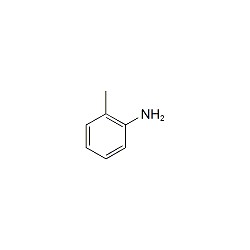 | 67679095-53-4 | 1×1 ml | Bitte anmelden |
ISO 17034 Reference Material m-Toluidine | 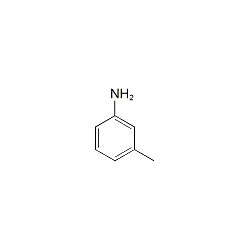 | 680090108-44-1 | 1×250 mg | Bitte anmelden |
ISO 17034 Reference Material p-Toluidine | 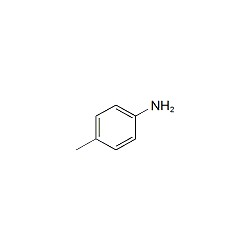 | 680091106-49-0 | 1×250 mg | Bitte anmelden |
ISO 17034 Certified Reference Material o-ToluidineKonzentration: 100 µg/ml Lösungsmittel: Methanol | 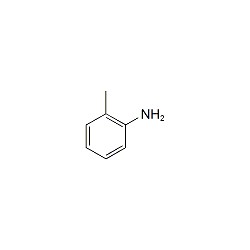 | 68206995-53-4 | 1×5 ml | Bitte anmelden |
ISO 17034 Certified Reference Material p-ToluidineKonzentration: 100 µg/ml Lösungsmittel: Methanol | 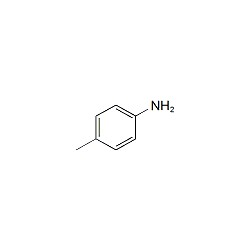 | 682070106-49-0 | 1×5 ml | Bitte anmelden |
ISO 17034 Certified Reference Material m-ToluidineKonzentration: 100 µg/ml Lösungsmittel: Methanol | 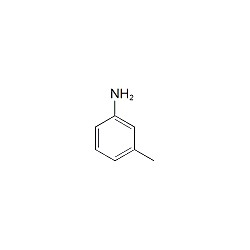 | 682071108-44-1 | 1×5 ml | Bitte anmelden |
ISO 17034 Reference Material D9-o-Toluidine | 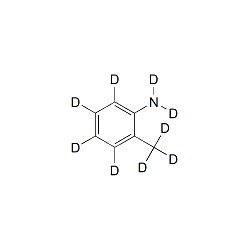 | 684693194423-47-7 | 1×50 mg | Bitte anmelden |
Toluidine
High-purity reference materials for accurate and reliable residue analysis.
Overview
Toluidine refers to a group of organic compounds known as aryl amines. There are three isomers of toluidine: o-toluidine, m-toluidine, and p-toluidine. These isomers are structurally similar to aniline, with a methyl group substituted onto the benzene ring. The position of the methyl group relative to the amino functional group distinguishes the three isomers.
The chemical formula for toluidine is C7H9N, and its molecular mass is 107.17 g/mol. The physical properties of toluidine vary slightly among the isomers, with melting points ranging from -30°C to 43°C and boiling points around 200°C.
Uses
The primary application of o-toluidine is as a precursor to pesticides such as metolachlor and acetochlor. Other toluidine isomers are used in the production of dyes and as components in accelerators for cyanoacrylate glues. In some patients, o-toluidine is a metabolite of prilocaine, which may cause methemoglobinemia, treated with methylene blue.
Regulatory
Toluidine and its isomers are subject to regulatory scrutiny due to their potential health and environmental impacts. Laboratories conducting residue analysis must ensure compliance with regulatory limits set by international quality requirements.
Monitoring
Monitoring toluidine levels in food and environmental samples is crucial for ensuring safety and compliance with regulatory standards. High-purity reference materials provided by HPC Standards GmbH are essential for accurate and reliable residue analysis.
Health Impact
Toluidine isomers, particularly o-toluidine, can pose health risks. Exposure may lead to conditions such as methemoglobinemia. Proper handling and safety measures are necessary to mitigate these risks.
Environmental Impact
Toluidine compounds can have significant environmental impacts if not properly managed. They may contribute to pollution and pose risks to aquatic life. Monitoring and controlling toluidine levels in the environment are essential for minimizing these impacts.
Safety Measure
Handling toluidine requires strict safety measures to prevent exposure and contamination. Personal protective equipment (PPE), proper ventilation, and adherence to safety protocols are essential for safe handling.
Analytical Standards
HPC Standards GmbH provides high-purity reference materials for toluidine, ensuring accurate and reliable residue analysis. Our products meet the highest industrial standards and are tested according to international quality requirements. These reference materials are essential for laboratories conducting food and environmental analysis to ensure compliance with regulatory limits.