

Thiabendazole
Ensure Accurate Residue Analysis with High-Purity Thiabendazole Standards
Thiabendazole is a high-purity reference material essential for accurate residue analysis in food and environmental laboratories, ensuring compliance with regulatory limits. HPC Standards GmbH offers top-quality Thiabendazole standards, meeting international quality requirements and the highest industrial standards. Our products are indispensable for laboratories dedicated to food and environmental analysis, providing reliable and precise results.
Filter
| Produkt | Bild | Artikelnummer/ CAS-Nr. | Füllmenge | Preis |
|---|---|---|---|---|
ISO 17034 Reference Material Thiabendazole | 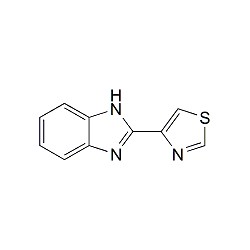 | 672889148-79-8 | 1×250 mg | Bitte anmelden |
ISO 17034 Certified Reference Material ThiabendazoleKonzentration: 10.0 µg/ml Lösungsmittel: Acetonitrile | 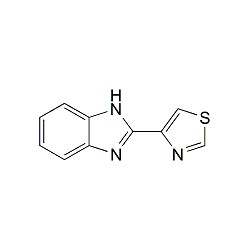 | 673450148-79-8 | 1×10 ml | Bitte anmelden |
ISO 17034 Certified Reference Material ThiabendazoleKonzentration: 100 µg/ml Lösungsmittel: Acetonitrile | 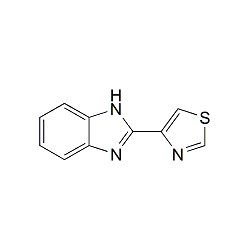 | 673451148-79-8 | 1×5 ml | Bitte anmelden |
ISO 17034 Reference Material 13C6-Thiabendazole | 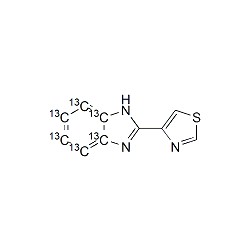 | 6801422140327-29-1 | 1×10 mg | Bitte anmelden |
ISO 17034 Certified Reference Material 13C6-ThiabendazoleKonzentration: 100 µg/ml Lösungsmittel: Acetonitrile | 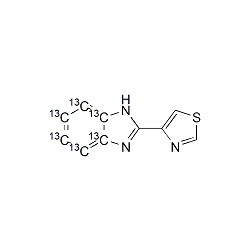 | 6801432140327-29-1 | 1×1 ml | Bitte anmelden |
ISO 17034 Certified Reference Material Thiabendazole | 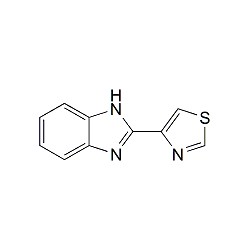 | 690396148-79-8 | 1×100 mg | Bitte anmelden |
| D4-Thiabendazole | 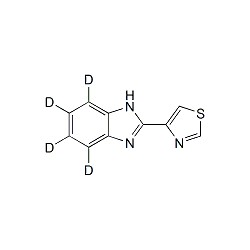 | 6916791190007-20-5 | 1×10 mg | Bitte anmelden |
Thiabendazole
Thiabendazole is a high-purity reference material essential for accurate residue analysis in food and environmental laboratories, ensuring compliance with regulatory limits.
Overview
Thiabendazole, also known as TBZ, is a benzimidazole derivative with antifungal and antiparasitic properties. It is commonly used as a preservative and a treatment for fungal diseases in fruits and vegetables. Additionally, it serves as an antiparasitic agent for controlling roundworms and other helminth species.
Uses
Thiabendazole is primarily used to control mold, blight, and other fungal diseases in fruits and vegetables. It is also used as a food additive and preservative, particularly in bananas and citrus fruits. In veterinary medicine, it is used to treat parasitic infections in livestock and pets. Additionally, it has applications in treating ear infections in dogs and cats and as a chelating agent for metal poisoning.
Regulatory
Thiabendazole is approved for use in various countries with specific regulatory limits. It is not approved as a food additive in the EU, Australia, and New Zealand. Compliance with these regulatory standards is essential for laboratories conducting residue analysis.
Monitoring
Regular monitoring of thiabendazole residues in food and environmental samples is crucial to ensure compliance with regulatory limits. High-purity reference materials are essential for accurate and reliable residue analysis.
Health Impact
Thiabendazole has slight toxicity at higher doses, with potential effects such as liver and intestinal disorders. In humans, side effects may include nausea, vomiting, loss of appetite, diarrhea, dizziness, drowsiness, and headache. Carcinogenic effects have been observed at higher doses.
Environmental Impact
Thiabendazole is used to control fungal diseases in plants, which can help reduce crop losses. However, its environmental impact should be monitored to prevent potential adverse effects on non-target organisms and ecosystems.
Safety Measure
Proper handling and usage of thiabendazole are essential to minimize exposure and potential health risks. Laboratories should follow safety guidelines and use appropriate protective equipment when working with this compound.
Analytical Standards
HPC Standards GmbH provides high-purity reference materials for thiabendazole, ensuring accurate and reliable residue analysis. Our products meet international quality requirements and the highest industrial standards, making them essential for laboratories conducting food and environmental analysis.