

Pentachlorobenzene
Ensure Accurate Residue Analysis with High-Purity Pentachlorobenzene Reference Materials
Pentachlorobenzene (PeCB) is a critical component for laboratories focused on food and environmental analysis. As a persistent organic pollutant, PeCB requires precise monitoring to comply with stringent regulatory limits. HPC Standards GmbH offers high-purity Pentachlorobenzene reference materials, tested to meet international quality standards. Trust our expertise to deliver reliable and accurate residue analysis for your laboratory needs.
Filter
| Produkt | Bild | Artikelnummer/ CAS-Nr. | Füllmenge | Preis |
|---|---|---|---|---|
ISO 17034 Certified Reference Material PentachlorobenzeneKonzentration: 100 µg/ml Lösungsmittel: Acetonitrile | 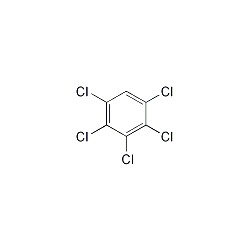 | 678453608-93-5 | 1×1 ml | Bitte anmelden |
ISO 17034 Certified Reference Material PentachlorobenzeneKonzentration: 100 µg/ml Lösungsmittel: Cyclohexane | 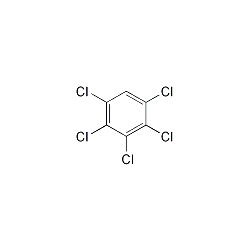 | 680124608-93-5 | 1×1 ml | Bitte anmelden |
ISO 17034 Certified Reference Material PentachlorobenzeneKonzentration: 100 µg/ml Lösungsmittel: Methanol | 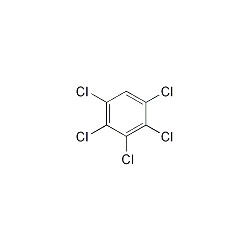 | 689206608-93-5 | 1×5 ml | Bitte anmelden |
ISO 17034 Reference Material Pentachlorobenzene | 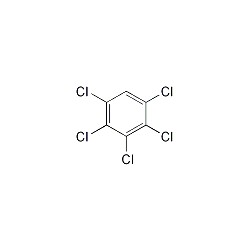 | 690158608-93-5 | 1×500 mg | Bitte anmelden |
Pentachlorobenzene Reference Materials
High-purity reference materials for accurate residue analysis in food and environmental samples.
Overview
Pentachlorobenzene (PeCB) is a chlorinated aromatic hydrocarbon with the molecular formula C6HCl5. It consists of a benzene ring substituted with five chlorine atoms. PeCB is a known persistent organic pollutant (POP) and has been banned globally by the Stockholm Convention on Persistent Organic Pollutants since 2009.
Uses
Historically, PeCB was used as an intermediate in the manufacture of pesticides, particularly the fungicide pentachloronitrobenzene. It was also a component in mixtures of chlorobenzenes added to products containing polychlorinated biphenyls to reduce viscosity and has been used as a fire retardant.
Regulatory
PeCB is classified as a persistent organic pollutant, which allows for accumulation in the food chain. It has been banned in the European Union since 2002 and is restricted under the Stockholm Convention.
Monitoring
Monitoring PeCB levels is crucial for ensuring compliance with regulatory limits in food and environmental samples. Laboratories rely on high-purity reference materials to achieve accurate residue analysis.
Health Impact
Human Toxicity
PeCB is toxic to humans, with a lethal dose (LD50) of 1080 mg/kg for rats and 1175 mg/kg for mice. Exposure can lead to various health issues, necessitating strict safety measures.
Environmental Impact
Effects on Wildlife
PeCB is very toxic to aquatic organisms. It decomposes on heating or burning, releasing toxic and corrosive fumes, including hydrogen chloride. Combustion can also result in the formation of polychlorinated dibenzodioxins ("dioxins") and polychlorinated dibenzofurans.
Safety Measures
Handling PeCB requires strict adherence to safety protocols to prevent exposure and environmental contamination. Appropriate precautionary statements include P210, P240, P241, P264, P270, P273, P280, P301+P312, P330, P370+P378, P391, and P501.
Analytical Standards
HPC Standards GmbH provides high-purity reference materials for Pentachlorobenzene, ensuring accurate and reliable residue analysis. Our products meet international quality requirements and the highest industrial standards, making them essential for laboratories conducting food and environmental analysis.