


Ethylene thiourea
Ensure Accurate Residue Analysis with High-Purity Ethylene Thiourea Reference Materials
For laboratories conducting food and environmental analysis, high-purity Ethylene Thiourea reference materials from HPC Standards GmbH are essential. Our products meet international quality requirements, ensuring compliance with regulatory limits and delivering reliable results. Trust HPC Standards for your analytical needs in monitoring ETU levels.
Filter
| Produkt | Bild | Artikelnummer/ CAS-Nr. | Füllmenge | Preis |
|---|---|---|---|---|
| Ethylene thiourea | 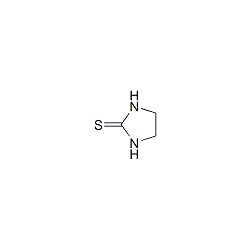 | 67485996-45-7 | 1×250 mg | Bitte anmelden |
ISO 17034 Certified Reference Material Ethylene thioureaKonzentration: 100 µg/ml Lösungsmittel: Acetonitrile | 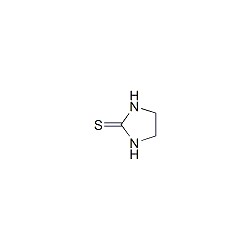 | 68037396-45-7 | 1×1 ml | Bitte anmelden |
| D4-Ethylene thiourea | 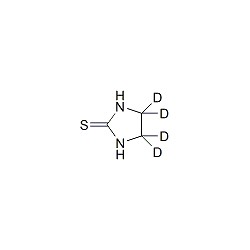 | 681813352431-28-8 | 1×10 mg | Bitte anmelden |
Ethylene Thiourea
High-purity reference materials for accurate and reliable residue analysis of Ethylene Thiourea.
Overview
Ethylene thiourea (ETU) is an organosulfur compound with the chemical formula C3H6N2S. It appears as a white solid and is commonly used as an accelerant in the vulcanization of neoprene rubbers. ETU is synthesized by treating ethylenediamine with carbon disulfide.
Uses
ETU is primarily used as an accelerant in the vulcanization process of neoprene rubbers. It also serves as a biomarker for exposure to ethylenebis dithiocarbamates (EBDTCs), which are widely used as fungicides in agriculture, particularly on fruits, vegetables, and ornamental plants.
Regulatory
The EPA (United States Environmental Protection Agency) has classified ethylene thiourea as a Group B2, probable human carcinogen. Due to its reproductive toxicity, carcinogenicity, and mutagenicity, alternatives are being sought to replace ETU in various applications.
Monitoring
Monitoring of ETU levels is essential in laboratories conducting food and environmental analysis to ensure compliance with regulatory limits. High-purity reference materials provided by HPC Standards GmbH are crucial for accurate and reliable residue analysis.
Health Impact
Human Toxicity
Ethylene thiourea is known to be a potent teratogen, causing birth defects in rats that are orally or dermally exposed. It has also been linked to carcinogenicity and mutagenicity, making it a concern for human health.
Environmental Impact
Effects on Wildlife
ETU can have detrimental effects on wildlife due to its toxic properties. Its use in agriculture as a fungicide can lead to environmental contamination, affecting various ecosystems.
Safety Measures
Handling of ethylene thiourea requires strict safety measures due to its hazardous nature. It is combustible and has a flash point of 252.2°C. Appropriate personal protective equipment (PPE) and adherence to occupational safety guidelines are essential.
Regulation
The EPA's classification of ETU as a probable human carcinogen has led to stringent regulatory measures. There are recommended exposure limits, and the use of encapsulated forms is advised to minimize risks.
Analytical Standards
HPC Standards GmbH provides high-purity reference materials for ethylene thiourea, ensuring laboratories can perform accurate and reliable residue analysis. Our products meet international quality requirements and the highest industrial standards.