

Chlormequat chloride
High-Purity Chlormequat Chloride for Accurate Residue Analysis
Ensure precise and reliable residue analysis in food and environmental samples with our high-purity reference materials for Chlormequat chloride. HPC Standards GmbH offers top-quality products that meet international standards, essential for laboratories to maintain compliance with regulatory limits.
Filter
| Produkt | Bild | Artikelnummer/ CAS-Nr. | Füllmenge | Preis |
|---|---|---|---|---|
ISO 17034 Certified Reference Material Chlormequat chloride | 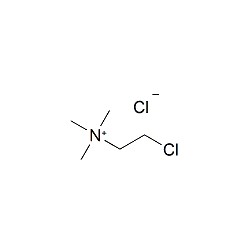 | 673150999-81-5 | 1×250 mg | Bitte anmelden |
| D9-Chlormequat chloride | 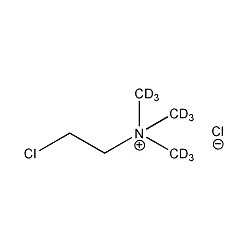 | 6731511219257-11-0 | 1×5 mg | Bitte anmelden |
ISO 17034 Certified Reference Material D9-Chlormequat chlorideKonzentration: 100 µg/ml Lösungsmittel: Deuterium oxide |  | 6738441219257-11-0 | 1×10 ml | Bitte anmelden |
ISO 17034 Certified Reference Material D9-Chlormequat chlorideKonzentration: 100 µg/ml Lösungsmittel: Deuterium oxide | 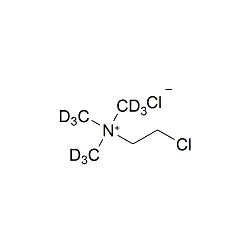 | 6738451219257-11-0 | 1×1 ml | Bitte anmelden |
ISO 17034 Certified Reference Material Chlormequat chlorideKonzentration: 10.0 µg/ml Lösungsmittel: Water | 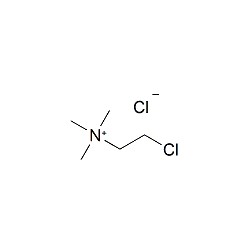 | 673846999-81-5 | 1×10 ml | Bitte anmelden |
ISO 17034 Certified Reference Material Chlormequat chlorideKonzentration: 100 µg/ml Lösungsmittel: Water | 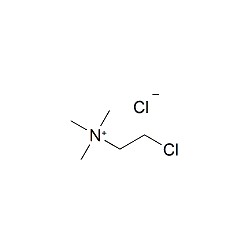 | 673847999-81-5 | 1×1 ml | Bitte anmelden |
| D4-Chlormequat chloride | 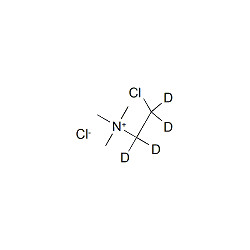 | 689853 | 1×10 mg | Bitte anmelden |
ISO 17034 Certified Reference Material D4-Chlormequat chlorideKonzentration: 100 µg/ml Lösungsmittel: Deuterium oxide | 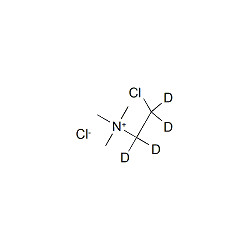 | 690072 | 1×1 ml | Bitte anmelden |
Chlormequat Chloride
High-purity reference materials for accurate and reliable residue analysis in food and environmental samples.
Overview
Chlormequat chloride is an organic compound with the formula ClCH2CH2N(CH3)+3. It is a plant growth regulator typically sold as the chloride salt, a colorless hygroscopic crystalline substance soluble in water and ethanol. It is an alkylating agent and a quaternary ammonium salt.
Uses
Chlormequat chloride is used as a plant growth regulator. It causes stem thickening, reduced stem height, additional root development, plant dwarfing, and increased chlorophyll concentration. It inhibits gibberellin biosynthesis, leading to reduced cell elongation and thicker, sturdier stalks, which facilitate the harvesting of cereal crops. It can also be used as an adjuvant for herbicides by retarding their oxidative disposal by plants due to cytochrome P450 inhibition.
Regulatory
In the United States, chlormequat is classified as a low-risk plant growth regulator and is registered for use on ornamental plants grown in greenhouses, nurseries, and shadehouses. The U.S. Environmental Protection Agency (EPA) proposed allowing its use on food crops such as barley, oat, triticale, and wheat in April 2023, indicating no dietary, residential, or aggregate risks of concern.
In the European Union, Regulation (EU) 2022/1290 amended the maximum residue levels (MRLs) for chlormequat in or on certain products, lowering the MRL for citrus fruits and modifying MRLs for other products such as apples, pears, quinces, cherries, plums, apricots, and barley.
Monitoring
Monitoring of chlormequat chloride residues is essential to ensure compliance with regulatory limits. Laboratories conducting food and environmental analysis rely on high-purity reference materials to achieve accurate and reliable results.
Health Impact
The LD50 (rat, oral) for chlormequat chloride is approximately 670 mg/kg. Exposure to high levels has been linked to developmental toxicity in animal models. However, the EPA's human health risk assessment indicated no dietary, residential, or aggregate risks of concern.
Environmental Impact
The EPA's ecological risk assessment identified no risks of concern to non-target aquatic vertebrates, aquatic invertebrates, and aquatic and terrestrial plants. Chlormequat chloride is considered safe for the environment when used according to regulatory guidelines.
Safety Measure
Proper handling and usage of chlormequat chloride are crucial to ensure safety. Users should follow regulatory guidelines and safety data sheets (SDS) to minimize exposure and environmental impact.
Analytical Standards
HPC Standards GmbH provides high-purity reference materials for chlormequat chloride, ensuring accurate and reliable residue analysis. Our products meet international quality requirements and the highest industrial standards, making them essential for laboratories conducting food and environmental analysis.