


Acetamiprid
ACETAMIPRID: Premium Reference Materials for Precise Residue Analysis
Ensure your laboratory achieves unparalleled accuracy with HPC Standards GmbH's high-purity Acetamiprid reference materials. Trusted by professionals in food and environmental analysis, our products meet stringent international quality standards, guaranteeing reliable results and regulatory compliance. Partner with us for your analytical needs and experience the difference in precision and reliability.
Filter
| Produkt | Bild | Artikelnummer/ CAS-Nr. | Füllmenge | Preis |
|---|---|---|---|---|
ISO 17034 Reference Material Acetamiprid | 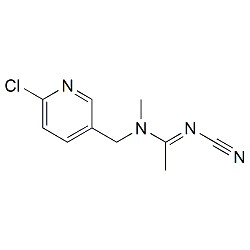 | 672808135410-20-7 | 1×100 mg | Bitte anmelden |
ISO 17034 Certified Reference Material AcetamipridKonzentration: 10.0 µg/ml Lösungsmittel: Acetonitrile | 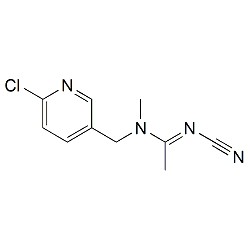 | 673184135410-20-7 | 1×10 ml | Bitte anmelden |
ISO 17034 Certified Reference Material AcetamipridKonzentration: 100 µg/ml Lösungsmittel: Acetonitrile | 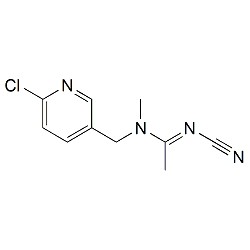 | 673185135410-20-7 | 1×5 ml | Bitte anmelden |
| D3-Acetamiprid | 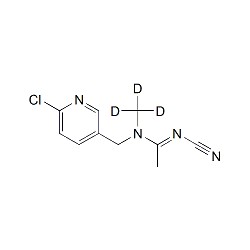 | 6794341353869-35-8 | 1×50 mg | Bitte anmelden |
ISO 17034 Certified Reference Material D3-AcetamipridKonzentration: 100 µg/ml Lösungsmittel: Acetonitrile | 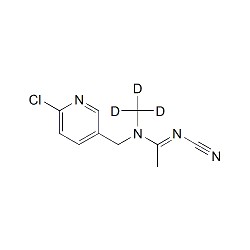 | 6842811353869-35-8 | 1×1 ml | Bitte anmelden |
ISO 17034 Certified Reference Material AcetamipridKonzentration: 100 µg/ml Lösungsmittel: Acetone | 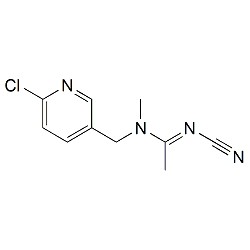 | 689378135410-20-7 | 1×5 ml | Bitte anmelden |
ISO 17034 Certified Reference Material Acetamiprid | 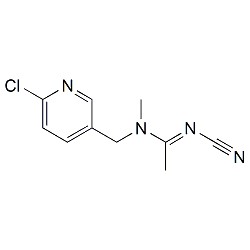 | 690171135410-20-7 | 1×50 mg | Bitte anmelden |
Acetamiprid
Acetamiprid: High-Purity Reference Materials for Accurate Residue Analysis
Overview
Acetamiprid is an organic compound with the chemical formula C10H11ClN4. It is a neonicotinoid insecticide used to control sucking insects on various crops. Acetamiprid is systemic and is produced under trade names such as Assail and Chipco by Aventis CropSciences.
Uses
Acetamiprid is used to protect crops like leafy vegetables, citrus fruits, pome fruits, grapes, cotton, cole crops, and ornamental plants. It is also effective against domestic pests such as fleas on cats and dogs. In commercial cherry farming, it is used to control the larvae of the cherry fruit fly.
Regulatory
Acetamiprid is classified as a Schedule 6 poison in Australia. The U.S. Environmental Protection Agency (EPA) does not consider it to be environmentally persistent and has set maximum application rates to ensure safety.
Monitoring
Monitoring acetamiprid residues is crucial for ensuring compliance with regulatory limits. Laboratories conducting food and environmental analysis rely on high-purity reference materials to achieve accurate and reliable results.
Health Impact
Acetamiprid is highly toxic to insects but less so to mammals. It acts as a nicotinic agonist, causing hyperactivity and muscle spasms in insects, leading to death. Human toxicity is low, but high doses can cause symptoms similar to organophosphate poisoning.
Environmental Impact
Acetamiprid has a high potential for bioaccumulation and is toxic to birds and moderately toxic to aquatic organisms. However, it degrades rapidly in soil, reducing the risk of groundwater contamination.
Safety Measure
Acetamiprid is classified as unlikely to be a human carcinogen. It has low acute and chronic toxicity in mammals and degrades rapidly in soil. Proper application rates should be followed to minimize risks to non-target organisms.
Analytical Standards
HPC Standards GmbH provides high-purity reference materials for acetamiprid, ensuring accurate residue analysis. Our products meet international quality requirements and the highest industrial standards, making them essential for laboratories in food and environmental analysis.