

Rotenone
Ensure Accurate Residue Analysis with High-Purity Rotenone Reference Materials
Rotenone is a crucial tool in residue analysis, used as a broad-spectrum insecticide, piscicide, and pesticide. HPC Standards GmbH offers high-purity reference materials for Rotenone, tested to meet international quality standards. Essential for laboratories in food and environmental analysis, our products ensure compliance with regulatory limits and deliver reliable results. Partner with us for your analytical needs and achieve precision in your residue analysis.
Filter
| Product | Image | Catalog No./ CAS No. | Quantity | Price |
|---|---|---|---|---|
ISO 17034 Certified Reference Material RotenoneConcentration: 10 µg/ml Solvent: Acetonitrile | 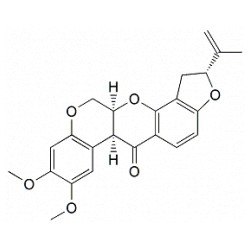 | 67343683-79-4 | 1×10 ml | Please log in |
ISO 17034 Certified Reference Material RotenoneConcentration: 100 µg/ml Solvent: Acetonitrile | 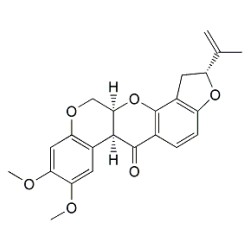 | 67343783-79-4 | 1×1 ml | Please log in |
| Rotenone | 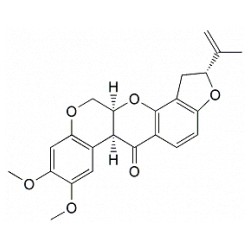 | 67476683-79-4 | 1×250 mg | Please log in |
ISO 17034 Certified Reference Material RotenoneConcentration: 100 µg/ml Solvent: Methanol | 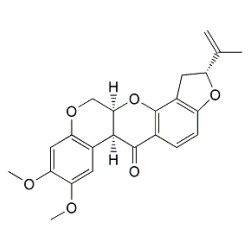 | 67756983-79-4 | 1×1 ml | Please log in |
ISO 17034 Certified Reference Material RotenoneConcentration: 10 µg/ml Solvent: Methanol | 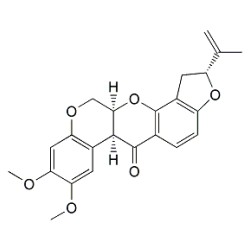 | 67757183-79-4 | 1×10 ml | Please log in |
Rotenone
High-Purity Reference Materials for Accurate Residue Analysis
Overview
Rotenone is an odorless, colorless, crystalline isoflavone used as a broad-spectrum insecticide, piscicide, and pesticide. It occurs naturally in the seeds and stems of several plants, such as the jicama vine, and in the roots of several other members of the Fabaceae family. Rotenone interferes with cellular respiration, making it effective in various applications.
Uses
Rotenone is used as a pesticide, insecticide, and nonselective piscicide. Historically, indigenous peoples used rotenone-containing plants to catch fish. In modern times, it is used to remove alien fish species and in agriculture to control pests like potato beetles and cucumber beetles. It is also used in powdered form to treat scabies and head lice on humans and parasitic mites on animals.
Regulatory
Rotenone use is regulated due to its toxicity. In the United States and Canada, all uses except as a piscicide are being phased out. It is banned in the United States for organic farming and in the UK for insecticides since 2009. Its use is less frequent in EU countries due to strict regulations.
Monitoring
Monitoring the presence of rotenone in environmental and food samples is crucial for compliance with regulatory limits. Laboratories conducting residue analysis rely on high-purity reference materials to ensure accurate and reliable results.
Health Impact
Rotenone is classified by the World Health Organization as moderately hazardous. It is mildly toxic to humans and other mammals but extremely toxic to insects and aquatic life. Chronic exposure to rotenone has been linked to the development of Parkinson's disease-like symptoms in animal studies.
Environmental Impact
Rotenone decays through metabolites and is reduced to water and carbon dioxide. Its use is considered more environmentally benign compared to other piscicides, as most species recolonize aquatic systems within weeks to a year after application. However, it is highly toxic to fish and aquatic invertebrates.
Safety Measure
Proper safety measures should be taken when handling rotenone. This includes wearing protective gear to avoid inhalation and skin contact. In case of spills, potassium permanganate can be used to deactivate rotenone in water, lowering its toxicity to acceptable levels.
Analytical Standards
HPC Standards GmbH provides high-purity reference materials for rotenone, tested according to international quality requirements. These reference materials are essential for laboratories conducting food and environmental analysis to ensure compliance with regulatory limits and achieve accurate residue analysis.