

Parathion-ethyl
Ensure Accurate Residue Analysis with High-Purity Parathion-ethyl Reference Materials
Parathion-ethyl is a highly toxic organophosphate insecticide, making precise residue analysis crucial for food and environmental safety. HPC Standards GmbH offers high-purity Parathion-ethyl reference materials, tested to meet international quality standards. Essential for laboratories, our products ensure compliance with regulatory limits and reliable results in residue monitoring. Partner with us for your food and environmental analysis needs.
Filter
| Product | Image | Catalog No./ CAS No. | Quantity | Price |
|---|---|---|---|---|
ISO 17034 Certified Reference Material Parathion-ethylConcentration: 100 µg/ml Solvent: Ethyl acetate | 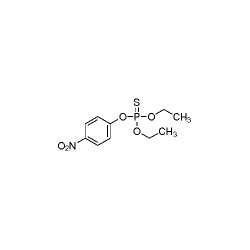 | 67365256-38-2 | 1×5 ml | Please log in |
| Parathion-ethyl | 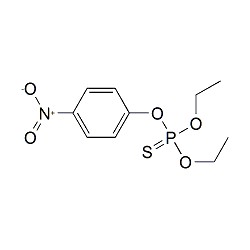 | 67455056-38-2 | 1×100 mg | Please log in |
ISO 17034 Reference Material D10-Parathion-ethyl | 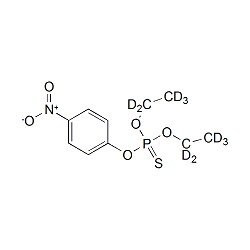 | 675077350820-04-1 | 1×10 mg | Please log in |
ISO 17034 Certified Reference Material Parathion-ethylConcentration: 100 µg/ml Solvent: Acetonitrile | 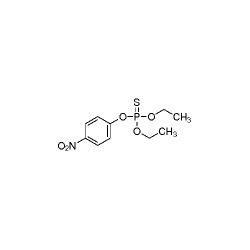 | 67529456-38-2 | 1×5 ml | Please log in |
ISO 17034 Certified Reference Material D10-Parathion-ethylConcentration: 100 µg/ml Solvent: Acetone | 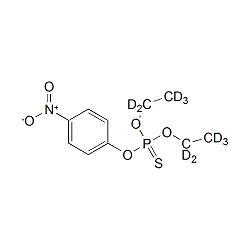 | 679116350820-04-1 | 1×1 ml | Please log in |
ISO 17034 Certified Reference Material Parathion-ethylConcentration: 10.0 µg/ml Solvent: Acetonitrile | 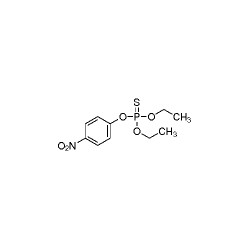 | 68788556-38-2 | 1×10 ml | Please log in |
Parathion-ethyl Reference Materials
High-purity reference materials for accurate and reliable residue analysis in food and environmental laboratories.
Overview
Parathion-ethyl, also known as O,O-Diethyl O-(4-nitrophenyl) phosphorothioate, is an organophosphate insecticide and acaricide. It was originally developed by IG Farben in the 1940s and is highly toxic to non-target organisms, including humans. Due to its high toxicity, its use has been banned or restricted in most countries.
Uses
Parathion-ethyl is primarily used as a pesticide, applied by spraying on crops such as cotton, rice, and fruit trees. The usual concentrations of ready-to-use solutions range from 0.05 to 0.1%. However, its use on many food crops is banned due to its high toxicity.
Regulatory
Parathion-ethyl has been banned or restricted in many countries due to its high toxicity. In the EU, it was banned after 2001, and in Switzerland, it is no longer approved as a pesticide. It is classified by the World Health Organization as Toxicity Class Ia (extremely hazardous).
Monitoring
Monitoring of parathion-ethyl residues is essential to ensure compliance with regulatory limits. Laboratories conducting food and environmental analysis require high-purity reference materials to accurately measure residue levels.
Health Impact
Parathion-ethyl is a cholinesterase inhibitor, disrupting the nervous system by inhibiting acetylcholinesterase. Symptoms of poisoning include headaches, convulsions, poor vision, vomiting, abdominal pain, severe diarrhea, unconsciousness, tremor, dyspnea, and pulmonary edema. Long-term exposure can lead to peripheral neuropathy and paralysis.
Environmental Impact
Parathion-ethyl is highly toxic to bees, fish, birds, and other wildlife. It is classified as a persistent organic pollutant and poses significant risks to non-target organisms in the environment.
Safety Measure
Handling parathion-ethyl requires strict safety measures, including the use of protective gloves, clothing, and respirators with organic-vapour cartridges. Industrial safety protocols include special ventilation, continuous air contamination measurement, and frequent analysis of workers' serum acetylcholinesterase activity.
Analytical Standards
HPC Standards GmbH provides high-purity reference materials for parathion-ethyl, ensuring accurate and reliable residue analysis. Our products are tested according to international quality requirements and meet the highest industrial standards, making them essential for laboratories conducting food and environmental analysis.