


Dimethenamid-P
High-Purity Dimethenamid-P Reference Materials for Accurate Residue Analysis
Ensure precise and reliable residue analysis with our high-purity Dimethenamid-P reference materials. Essential for laboratories conducting food and environmental analysis, our products meet international quality standards and support compliance with regulatory limits. Partner with HPC Standards GmbH for top-tier analytical standards in pesticide residue testing.
Filter
| Product | Image | Catalog No./ CAS No. | Quantity | Price |
|---|---|---|---|---|
ISO 17034 Reference Material Dimethenamid-P | 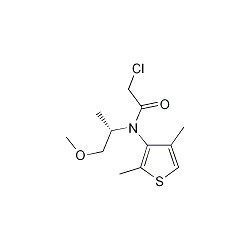 | 674560163515-14-8 | 1×100 mg | Please log in |
ISO 17034 Certified Reference Material Dimethenamid-PConcentration: 10.0 µg/ml Solvent: Acetonitrile |  | 684251163515-14-8 | 1×10 ml | Please log in |
ISO 17034 Certified Reference Material Dimethenamid-PConcentration: 100 µg/ml Solvent: Acetonitrile |  | 691716163515-14-8 | 1×1 ml | Please log in |
Dimethenamid-P Reference Materials
High-purity reference materials for accurate residue analysis of Dimethenamid-P.
Overview
Dimethenamid-P is a widely used herbicide belonging to the chloroacetamide class (group 15). It inhibits the synthesis of certain long-chain fatty acids, thus reducing plant growth. It is primarily used for controlling annual grasses, certain annual broadleaf weeds, and sedges.
Uses
Dimethenamid-P is registered for use in field corn, seed corn, popcorn, and soybeans. Supplemental labeling allows its use on sweet corn, grain sorghum, dry beans, and peanuts.
Regulatory
In registering dimethenamid (SAN 582H/Frontier), the EPA concluded that the primary means of dissipation of dimethenamid applied to the soil surface is photolysis, whereas below the surface, loss is due largely to microbial metabolism.
Monitoring
Monitoring of Dimethenamid-P residues is crucial for ensuring compliance with regulatory limits in food and environmental samples. Our reference materials support accurate and reliable analysis in laboratories.
Health Impact
Human Toxicity
Dimethenamid-P is classified as harmful (Xn) with hazard statements H302 (harmful if swallowed), H317 (may cause an allergic skin reaction), H332 (harmful if inhaled), H410 (very toxic to aquatic life with long-lasting effects), and H411 (toxic to aquatic life with long-lasting effects).
Environmental Impact
Effects on Wildlife
Dimethenamid-P is very toxic to aquatic life with long-lasting effects. It undergoes anaerobic microbial degradation under various conditions, with more than half of the herbicide carbon found to be incorporated irreversibly into soil-bound residue.
Safety Measures
Precautionary statements for Dimethenamid-P include P261 (avoid breathing dust/fume/gas/mist/vapors/spray), P264 (wash thoroughly after handling), P270 (do not eat, drink, or smoke when using this product), P271 (use only outdoors or in a well-ventilated area), P280 (wear protective gloves/protective clothing/eye protection/face protection), and others to ensure safe handling and use.
Regulation
Dimethenamid-P is regulated under various international standards to ensure its safe use in agricultural practices. Compliance with these regulations is essential for environmental and human health protection.
Analytical Standards
HPC Standards GmbH provides high-purity reference materials for Dimethenamid-P, ensuring accurate and reliable residue analysis. Our products meet international quality requirements and the highest industrial standards, supporting laboratories in food and environmental analysis.