

Diisononyl phthalate
Ensure Accurate Residue Analysis with High-Purity Diisononyl Phthalate (DINP) Reference Materials
Unlock precision in your food and environmental testing with HPC Standards GmbH's high-purity Diisononyl Phthalate (DINP) reference materials. Our rigorously tested products meet international quality standards, providing reliable results for compliance with regulatory limits. Trust us as your competent partner in residue analysis.
Filter
| Product | Image | Catalog No./ CAS No. | Quantity | Price |
|---|---|---|---|---|
ISO 17034 Reference Material Diisononyl phthalate (mixture of branched chain isomers) | 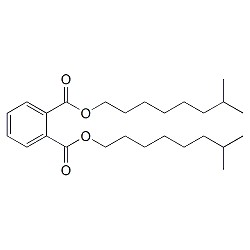 | 67829028553-12-0 | 1×250 mg | Please log in |
ISO 17034 Certified Reference Material Diisononyl phthalate (mixture of branched chain isomers)Concentration: 1000 µg/ml Solvent: Acetone | 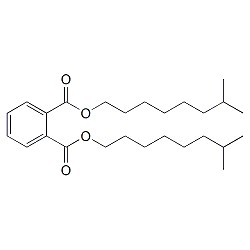 | 69217228553-12-0 | 1×10 ml | Please log in |
ISO 17034 Certified Reference Material Diisononyl phthalate (mixture of branched chain isomers)Concentration: 1000 µg/ml Solvent: Methanol | 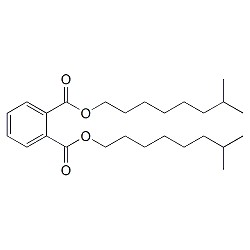 | 69218428553-12-0 | 1×1 ml | Please log in |
ISO 17034 Certified Reference Material Diisononyl phthalate (mixture of branched chain isomers)Concentration: 1000 µg/ml Solvent: Acetonitrile | 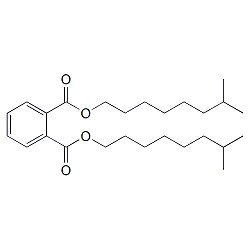 | 69442828553-12-0 | 1×1 ml | Please log in |
Diisononyl Phthalate (DINP) Reference Materials
High-purity reference materials for accurate and reliable residue analysis in food and environmental samples.
Overview
Diisononyl phthalate (DINP) is a phthalate commonly used as a plasticizer. It consists of various isononyl esters of phthalic acid and is found in a wide range of plastic products. DINP is an oily, viscous liquid with a chemical formula of C26H42O4 and a molar mass of 418.618 g/mol.
Uses
DINP is primarily used to enhance the flexibility and durability of plastic products. It is commonly found in items such as cables, flooring, and wall coverings.
Regulatory
The European Union has set a maximum specific migration limit (SML) of 9 mg/kg for the sum of diisononyl phthalates and diisodecyl phthalates in food contact materials. In California, DINP is listed as a substance known to cause cancer under Proposition 65 legislation.
Monitoring
Monitoring the levels of DINP in food and environmental samples is crucial for ensuring compliance with regulatory limits. Reference materials are essential for accurate and reliable residue analysis.
Health Impact
Human Toxicity
DINP has been associated with various health issues. It is listed as a carcinogen in California under Proposition 65. However, the European Chemicals Agency's (ECHA) Risk Assessment Committee concluded that DINP does not warrant classification for reprotoxic effects under the EU's Classification, Labelling and Packaging (CLP) regulation.
Environmental Impact
Effects on Wildlife
Studies have shown that DINP can disrupt the endocannabinoid system in zebrafish, affecting reproduction and causing other adverse effects on aquatic organisms. It can upregulate orexigenic signals and cause hepatosteatosis, along with deregulation of lipid metabolism.
Safety Measures
Proper handling and disposal of DINP are essential to minimize its environmental and health impacts. Safety measures should include using personal protective equipment and adhering to regulatory guidelines.
Regulation
DINP is regulated under various international guidelines to ensure its safe use in consumer products. Compliance with these regulations is essential for manufacturers and laboratories.
Analytical Standards
HPC Standards GmbH provides high-purity reference materials for DINP to ensure accurate and reliable residue analysis. Our products are tested according to international quality requirements and meet the highest industrial standards.