


Carbendazim
Ensure Accurate Residue Analysis with High-Purity Carbendazim Reference Materials
Carbendazim, a vital fungicide in agriculture, demands precise monitoring to meet stringent regulatory limits. HPC Standards GmbH offers high-purity reference materials for carbendazim, ensuring laboratories achieve accurate and reliable residue analysis. Our products, tested to international quality standards, are essential for food and environmental analysis, helping you maintain compliance and uphold the highest industrial standards. Trust HPC Standards GmbH for your analytical needs in pesticide residue testing.
Filter
| Product | Image | Catalog No./ CAS No. | Quantity | Price |
|---|---|---|---|---|
ISO 17034 Reference Material Carbendazim | 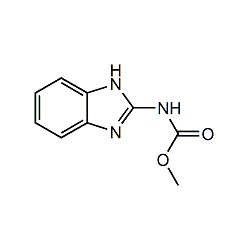 | 67282110605-21-7 | 1×250 mg | Please log in |
ISO 17034 Reference Material D4-Carbendazim | 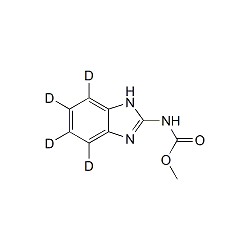 | 676272291765-95-2 | 1×10 mg | Please log in |
ISO 17034 Certified Reference Material D4-CarbendazimConcentration: 100 µg/ml Solvent: Methanol | 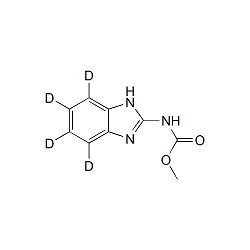 | 676415291765-95-2 | 1×1 ml | Please log in |
ISO 17034 Certified Reference Material CarbendazimConcentration: 100 µg/ml Solvent: Methanol | 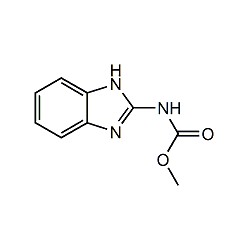 | 67670210605-21-7 | 1×5 ml | Please log in |
ISO 17034 Certified Reference Material D3-CarbendazimConcentration: 100 µg/ml Solvent: D6-Acetone | 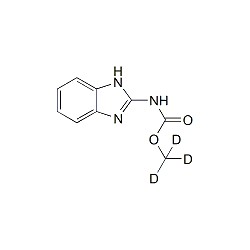 | 6769281255507-88-0 | 1×1 ml | Please log in |
ISO 17034 Certified Reference Material CarbendazimConcentration: 10.0 µg/ml Solvent: Methanol | 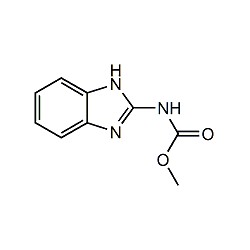 | 67812410605-21-7 | 1×10 ml | Please log in |
ISO 17034 Certified Reference Material CarbendazimConcentration: 100 µg/ml Solvent: Methanol | 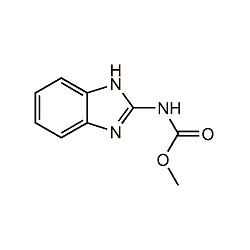 | 68874010605-21-7 | 1×1 ml | Please log in |
Carbendazim
High-purity reference materials for accurate and reliable residue analysis
Overview
Carbendazim is a fungicide belonging to the benzimidazole class. It is a metabolite of benomyl and is used to control a variety of plant diseases in cereals and fruits, including citrus, bananas, strawberries, macadamia nuts, pineapples, and pomes. It is also employed as a casting worm control agent in amenity turf situations such as golf greens and tennis courts.
Uses
Carbendazim is primarily used in agriculture to control fungal diseases in crops. It is effective against a wide range of fungi and is commonly applied to cereals, fruits, and nuts. Additionally, it is used in some countries for controlling casting worms in turf settings like golf courses and tennis courts.
Regulatory
Maximum pesticide residue limits (MRLs) for carbendazim in fresh produce in the EU range from 0.1 to 0.7 mg/kg, with an exception for loquat, which has a limit of 2 mg/kg. The limits for commonly consumed citrus and pome fruits are between 0.1 and 0.2 mg/kg. Its use has been controversial in some regions, such as macadamia plantations in Queensland.
Monitoring
Regular monitoring of carbendazim residues in food and the environment is essential to ensure compliance with regulatory limits. Laboratories conducting these analyses require high-purity reference materials to achieve accurate and reliable results.
Health Impact
High doses of carbendazim have been shown to cause infertility and testicular damage in laboratory animals. It is classified as a testicular toxicant and endocrine disruptor. Proper handling and usage guidelines must be followed to minimize health risks.
Environmental Impact
Carbendazim can have adverse effects on the environment, particularly on non-target organisms. Its persistence in soil and water necessitates careful management to prevent contamination and ecological harm.
Safety Measures
When handling carbendazim, appropriate safety measures should be taken, including the use of personal protective equipment (PPE) and adherence to safety guidelines. Proper storage and disposal practices are also crucial to prevent accidental exposure and environmental contamination.
Analytical Standards
HPC Standards GmbH provides high-purity reference materials for carbendazim, ensuring accurate and reliable residue analysis. Our products are tested according to international quality requirements and meet the highest industrial standards. These reference materials are essential for laboratories conducting food and environmental analysis to ensure compliance with regulatory limits.