


Cannabidiolic acid
High-Purity Cannabidiolic Acid (CBDA) Reference Materials for Accurate Residue Analysis
Ensure precision in your food and environmental testing with HPC Standards' high-purity Cannabidiolic Acid (CBDA) reference materials. Our products are meticulously tested to meet international quality standards, providing reliable results for regulatory compliance and scientific research. Trust HPC Standards for your CBDA analytical needs.
Filter
| Product | Image | Catalog No./ CAS No. | Quantity | Price | |
|---|---|---|---|---|---|
ISO 17034 Certified Reference Material Cannabidiolic acidConcentration: 10.0 µg/ml Solvent: Methanol | 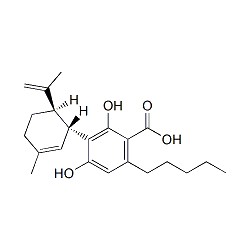 | 6843431244-58-2 | 1×1 ml | Please log in | |
ISO 17034 Reference Material Cannabidiolic acid | 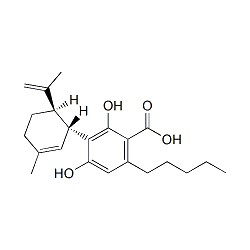 | 6849151244-58-2 | 1×5 mg | Please log in | |
ISO 17034 Reference Material D9-Cannabidiolic acid | 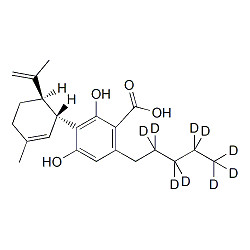 | 6904082512203-30-2 | 1×5 mg | on request | |
ISO 17034 Certified Reference Material D9-Cannabidiolic acidConcentration: 100 µg/ml Solvent: Acetonitrile | 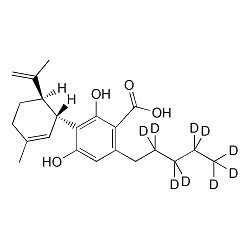 | 6904442512203-30-2 | 1×1 ml | on request | |
Cannabidiolic Acid (CBDA) Reference Materials
High-purity reference materials for accurate residue analysis in food and environmental samples.
Overview
Cannabidiolic acid (CBDA) is a cannabinoid produced in cannabis plants. It is most abundant in the glandular trichomes on the female seedless flowers, commonly referred to as buds or flowers.
CBDA is a natural product sesquiterpene biosynthesized in cannabis via Cannabidiolic acid synthase from the conjugation of olivetolic acid and cannabigerolic acid.
Uses
CBDA is primarily used in scientific research and residue analysis within laboratories that focus on food and environmental samples. It is the chemical precursor to cannabidiol (CBD) and is studied for its potential health benefits and pharmacological properties.
Regulatory
CBDA and its derivatives are subject to regulatory scrutiny to ensure compliance with international quality and safety standards. Laboratories must adhere to these regulations to maintain the integrity and reliability of their analyses.
Monitoring
Accurate monitoring of CBDA levels in various matrices is essential for regulatory compliance and ensuring the safety of food and environmental samples. High-purity reference materials are crucial for this purpose.
Health Impact
Human Toxicity
CBDA is generally considered non-toxic to humans. However, its effects are still under research, and it is essential to handle it according to safety guidelines.
Environmental Impact
Effects on Wildlife
The environmental impact of CBDA is not well-documented. However, as a natural compound, it is expected to have minimal adverse effects on wildlife.
Safety Measures
Proper safety measures must be observed when handling CBDA. This includes using appropriate personal protective equipment (PPE) and adhering to laboratory safety protocols.
Regulation
CBDA is regulated under various international guidelines to ensure its safe and effective use in analytical applications. Compliance with these regulations is mandatory for laboratories.
Analytical Standards
HPC Standards GmbH provides high-purity reference materials for CBDA, ensuring accurate and reliable residue analysis. Our products meet the highest industrial standards and are tested according to international quality requirements.