

Azoxystrobin
Ensure Accurate Residue Analysis with High-Purity Azoxystrobin Reference Materials
HPC Standards GmbH offers top-tier, high-purity reference materials for Azoxystrobin, a widely used systemic fungicide in agriculture. Our products are meticulously tested to meet international quality standards, providing laboratories with the precision needed for reliable residue analysis. Essential for food and environmental testing, our Azoxystrobin reference materials help ensure compliance with stringent regulatory limits. Partner with us for unparalleled accuracy in your analytical processes.
Filter
| Product | Image | Catalog No./ CAS No. | Quantity | Price |
|---|---|---|---|---|
ISO 17034 Certified Reference Material AzoxystrobinConcentration: 100 µg/ml Solvent: Ethyl acetate | 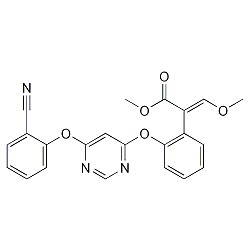 | 673479131860-33-8 | 1×1 ml | Please log in |
ISO 17034 Reference Material Azoxystrobin | 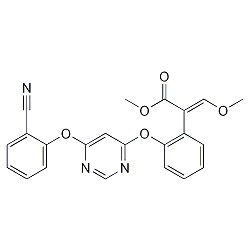 | 673826131860-33-8 | 1×100 mg | Please log in |
ISO 17034 Certified Reference Material AzoxystrobinConcentration: 10.0 µg/ml Solvent: Acetonitrile | 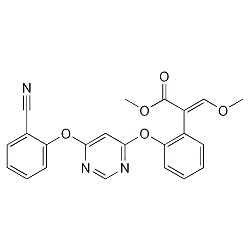 | 673860131860-33-8 | 1×10 ml | Please log in |
| D4-Azoxystrobin | 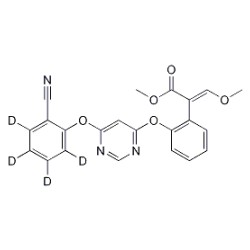 | 6746561346606-39-0 | 1×10 mg | Please log in |
ISO 17034 Certified Reference Material D4-AzoxystrobinConcentration: 100 µg/ml Solvent: Acetonitrile | 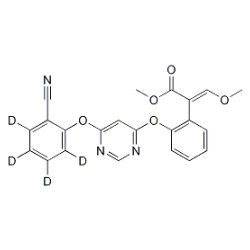 | 6746761346606-39-0 | 1×1 ml | Please log in |
ISO 17034 Certified Reference Material AzoxystrobinConcentration: 100 µg/ml Solvent: Acetonitrile | 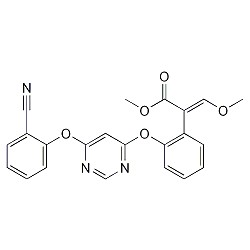 | 676692131860-33-8 | 1×1 ml | Please log in |
ISO 17034 Certified Reference Material AzoxystrobinConcentration: 100 µg/ml Solvent: Acetone | 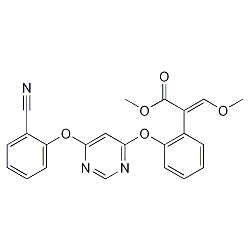 | 689380131860-33-8 | 1×1 ml | Please log in |
ISO 17034 Certified Reference Material Azoxystrobin | 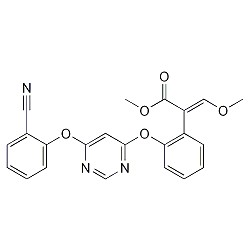 | 691782131860-33-8 | 1×50 mg | Please log in |
Azoxystrobin
High-purity reference materials for accurate and reliable residue analysis of Azoxystrobin.
Overview
Azoxystrobin is a broad-spectrum systemic fungicide widely used in agriculture to protect crops from fungal diseases. It was first marketed in 1996 under the brand name Amistar and has since been registered in numerous countries for use on various crops.
Azoxystrobin inhibits mitochondrial respiration by blocking electron transport, preventing ATP production. It is available only in formulated products, aiding its use in water-based sprays.
Uses
Azoxystrobin is used in agriculture and horticulture to control a wide range of fungal diseases such as leaf spot, rusts, powdery mildew, downy mildew, net blotch, and blight. It is registered for use on important crops including wheat, barley, oats, rye, soya, cotton, rice, strawberry, peas, beans, and onions.
It is also used in home and garden settings, particularly for controlling fungal diseases of turf on golf courses and lawns.
Regulatory
In the United States, the Environmental Protection Agency (EPA) regulates azoxystrobin under the Federal Insecticide, Fungicide, and Rodenticide Act (FIFRA) and the Food Quality Protection Act (FQPA). In the European Union, a two-tiered approach is used for approval and authorization.
All pesticides, including azoxystrobin, must be registered with appropriate authorities in the country of use. Labels provide legally binding directions for effective product performance while minimizing risks to human health and the environment.
Monitoring
Monitoring programs ensure that pesticide residues in food are below the limits set by regulatory authorities such as the European Food Safety Authority. The estimated annual use of azoxystrobin in US agriculture shows an increasing trend, reaching significant levels in recent years.
Health Impact
Azoxystrobin has low toxicity to mammals with an LD50 of over 5000 mg/kg (rats, oral). However, it can cause skin and eye irritation. The acceptable daily intake for azoxystrobin is 0-0.2 mg/kg bodyweight per day as determined by the World Health Organization (WHO) and Food and Agriculture Organization (FAO).
Environmental Impact
Azoxystrobin has a low potential for bioconcentration and poses moderate risks to fish, earthworms, and bees but high risks to aquatic crustaceans. Its main degradation product is also potentially harmful to aquatic environments.
Care must be taken to avoid runoff into water bodies to mitigate environmental risks.
Safety Measures
Precautionary statements for azoxystrobin include avoiding inhalation and contact with skin and eyes. First aid information is provided on product labels. Proper handling and application techniques are essential to ensure safety.
Analytical Standards
HPC Standards GmbH provides high-purity reference materials for azoxystrobin, ensuring accurate and reliable residue analysis. Our products are tested according to international quality requirements and meet the highest industrial standards, making them essential for laboratories conducting food and environmental analysis to ensure compliance with regulatory limits.